

We rejoin the story at a junction and another bid to prove myself. After graduating from Cambridge, my dream of being a scientist burned brightly. A dream partially built on an honest curiosity and desire to learn, and partially on a deep, driving need to prove that I was enough. Smart enough, good enough, successful enough. I felt like I had gotten on a train that could take me somewhere important, and the next stop I had to make was to get a PhD.
A PhD is a magnet to those of us who do well academically out of a desire to prove our worth. Academia is fuelled by the exploitation of insecurity.
Somehow, I got accepted into a highly prestigious molecular biology PhD program at Cambridge. Again, I felt the heady rush of validation. It didn’t reach the heights of getting into Cambridge the first time, but it still made me feel good. Until – yet again – it slowly faded to be replaced by uncertainty and anxiety.
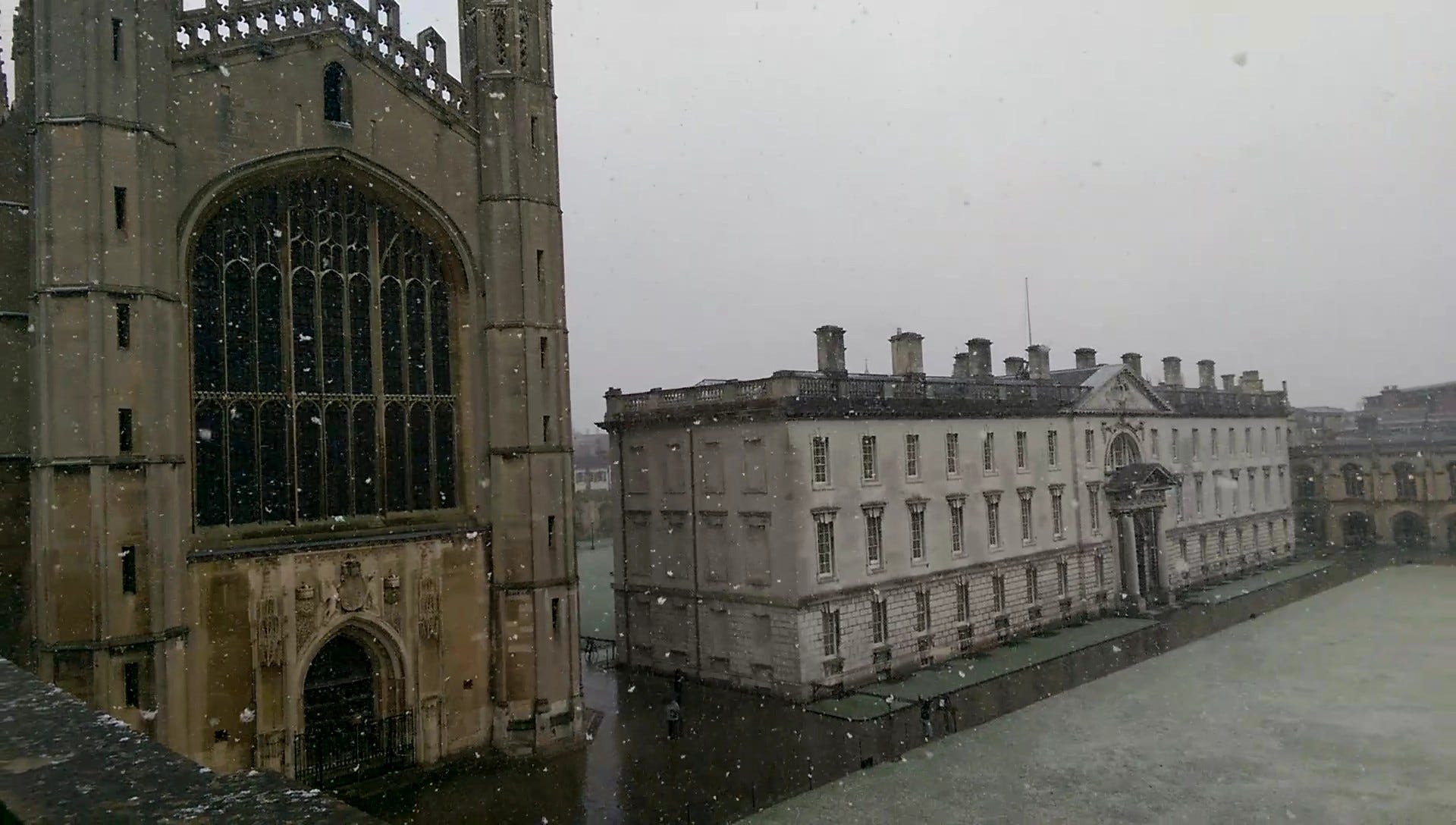
I loved the creative aspects of my PhD, coming up with ideas, forming connections between concepts, writing outlines and finding shape in our world. It was like writing stories in many ways, deeply creative and rewarding in its own right. But on its own, it was not enough to sustain me. I was caught up in prestige, the idea of writing great scientific papers and delusional dreams of winning Nobel prizes.
Is that not the ultimate validation in the eyes of the world? In my heart of hearts I dreamt of that validation.
But when the reality of the long slow work of a PhD set in, that desire for recognition was not a strong enough driver to ward off the sense of failure. The dry day-to-day of science is the grinding away at results and failed experiments, and analysing half-baked data that amounts to nothing. Failure upon failure is an essential part of the process. But I compared myself to the successes around me. Someone was always doing better, publishing papers, having success. Their wins put my own failures in sharp relief.
I started feeling hopeless, like I was moving through treacle and getting nowhere. A malaise born out of comparison and high expectations. I hit a wall and in retrospect what I would now say was my first burnout. I felt inadequate. Not enough. I was horizontal on the couch, unable to work for months, a vicious cycle of feeling like shit for not doing enough, therefore too anxious to do any work, making me feel even more shit. It took the compassionate intervention of my supervisor to get out of it.
Through his non-judgemental help and unconditional acceptance I was slowly brought back. One of the things he said to me then started laying a foundation for things to come. He said: ‘The fact that you haven’t been able to do it means it couldn’t have been done.’
I forgave myself for failing. He helped me find joy in the work again and the excitement of learning and scientific creativity came back. I started writing my thesis, and in writing I flourished again. All the pieces fell into place as I wrote, and I managed to finish my PhD in a remarkable three years.
Again, the validation returned, giving me a burning drive to push higher, prove to myself that I could make it as a scientist. I was living the dream I had been harbouring for all those years. The dream of a twenty-year-old Alex with the world at his feet. I was a scientist, publishing papers, doing exciting work. So why did it not feel like I had succeeded? Why did I still not feel enough? The answer I came up with then was that it’s the reality: a PhD is a baby step, I’d have to do a postdoc, publish more prestigious papers, win scientific awards, maybe then it would feel like I have made it? I knew I wasn’t enough, because the scientific world told me so.
The answer I see now, looking back, is very different. There could never be an enough. I was chasing a ghost, an inadequacy within me that no amount of success could ever fill. But I didn’t know that.
That is the reality of academia, the scientific grind, fuelled by people like me, intent on proving their worth. For all the great achievements in the world, all the innovation, how many souls are burned, fuel to the neverending machine of constant progress, nothing ever enough?
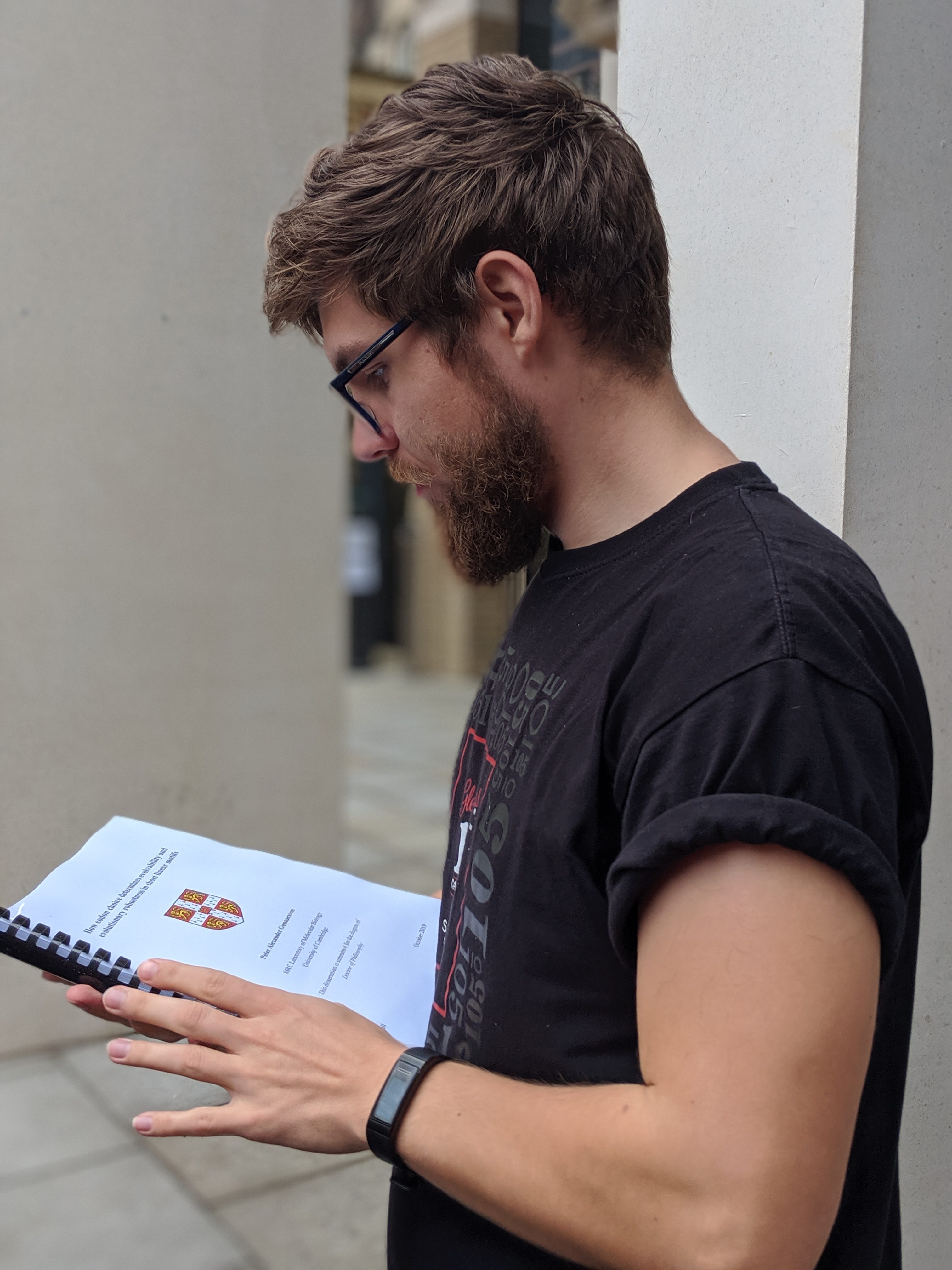
After my PhD, in late 2020 the world was in lockdown, and I moved continents to pursue the next stage of my scientific career. You make whatever sacrifices you have to in pursuit of the dream, no matter the costs. I left my life in the UK, started doing long-distance with my partner of 7 years, and moved to a small US city in the middle of lockdown, far from family, friends, and my normal life.
In that profound isolation, compounded by a lack of progress at work, I began to spiral. Through many lonely nights of deep self-doubt I burnt my essence until nothing remained. I felt like a husk – a human without soul. In the dark depths of depression I lost my sense of self, feeling barely human. I was fragmented, disintegrating into shards of ideas, feelings and thoughts. I dreamt of escape, a hut in a forest or a boat upon the sea far away from it all. But my ambition, my insecurity wouldn’t let me leave. If I left… If I failed and didn’t make it in science I would be nothing. My whole identity, the foundation I’d created, would crumble. I was being crushed between ego and despair.
Unable to leave my house or even my bed, I felt like I was drowning in a sea of my own making.
At absolute rock bottom, feeling like I had no way out, I started therapy. I was becoming aware of the deep anxiety and insecurity within, built on a life of chasing validation. I had no idea how to navigate it and needed help.
Slowly we began shining a light into corners of my mind I had never dared look at. We started untangling a web of connected thoughts that I took to be objective reality, but were spectres and stories I had created. We started probing why I formed this way of viewing myself and the world; what it means to be a failure; how we define value. I still remember the question that slowly wormed its way into my mind, and changed the course of my life: Can you have value in absence of achievement? What’s your value to yourself? I remember my brain rejecting the premise, it made no sense. Value is based on what we do, was my simple, instinctive answer.
But the question stayed with me for months, a grating splinter in the back of my mind. One evening, as I stood looking at myself in the mirror – looking into my own eyes – a switch flipped. For a split second I saw myself from afar: a being consisting of trillions of living cells on a pebble in a small solar system, all made out of atoms forged in the hearts of stars, long dead. And it overwhelmed me in that second. Simply by existing we are enough, what else is there? We are parts of the universe like everything else, simple earthly beings. Existence is all we have to give ourselves, all we are, the only thing of value.
The feeling passed, but I had glimpsed something I had never before felt. An internal sense of worth, not based on external achievement.
It didn’t change a lifetime of patterns and emotions instantly, but it had opened the door. It allowed me to say enough is enough and recognise how depressed I was, alone in my desolate flat, fighting for a life that brought me such pain and misery.
Slowly, I accepted the idea that I could quit without losing who I was. The shift in mentality meant I could accept a different reality and begin the process of moving back home, to the UK, to my partner, and start living again.
But the questions that remained still weighed heavily. What now?
How do I give up on a dream and a career? How do I approach a life when I’m not striving and climbing, trying to make it? Is ambition always bad, should I not care at all? I had no answers, just an amorphous, terrifying future, but it glowed with a sense of hope.
Thank you for being here, and reading my words, witnessing my soul laid bare. It was through the help of others and their experiences that I realised there could be another way to look at things, so I hope sharing my experiences can help others.
Feel free to reach out with questions or comments here or through email or message, I’m always happy to answer and curious to learn.
Next week I will conclude this essay series with all that happened after I moved back to Edinburgh – trying to find my footing in a new career, burning out again despite it all – and eventually finding Kismet, the little boat that changed my life.
If you enjoy my writing please consider subscribing. It helps more than you know, and I value this community immensely. By choosing a free or paid subscription you support my writing, and help others find their way here. Thank you.
Paid support option: To celebrate the launch of Part 2, I'm offering 20% off paid subscriptions as a heartfelt thank you for being a part of this journey. Your support helps me continue writing.
https://www.alexandergunnarsson.com/JoinTheCrew
Read part 1 here:

Such an honest reflection, Alexander. You write beautifully. It can be so hard to separate our sense of worth from external validation, but I'm so glad you found your way to that distinction. What really struck me was how much you'd already achieved, yet still felt there was more to prove. That self-doubting voice can be so very cruel. I also found this line incredibly thought-provoking: ‘For all the great achievements in the world, all the innovation, how many souls are burned, fuel to the never-ending machine of constant progress, nothing ever enough?’. It made me think about how rarely we stop to ask what success has asked of the person who achieved it. Wishing you fair winds as you continue your journey. 💚
This is such a profound question to ask and say yes to, it's the path to the soul: "Can you have value in absence of achievement?"