

I want to try to tell the story of my burnout. It’s a story of my ambition – of achieving all the things I’d dreamt of, working in my dream career – yet never quite feeling enough. This is part of the making of all that led me to sailing, Kismet, and getting to know myself again. I have never told this story, mostly because I didn’t understand it well enough to put words to it. But also because it’s something that is difficult to tell in person, but easier to tell in writing, and until now I have not had a space for long form writing that I can share with people.
But where does it really begin? What’s the story of a life lived in pursuit of something so elusive, meaning and self worth? I could start at the very beginning, giving the details of growing up in Sweden, being the eldest child, the people pleasing from a young age – wanting everyone to like me in school and being conflict avoidant – and feeling a need to have top grades in every subject. But in some ways I think those things are a given prerequisite, and the heart of the journey can really be traced from the year before university.
My dream then was to become a scientist. I always loved the natural world, and loved learning about it through nature documentaries and school. The mechanisms of how life, Earth, and the universe all worked became a deep passion. I remember being ambitious too, wanting to do great things, dreaming of legacy, fame and achievements. About to turn twenty, I felt like the world was at my feet and I really liked the feelings ambition gave me: the sense of importance and meaning. It felt good to fight and strive for something, an ideal, a vision – to achieve. Somewhere within me I had a certainty that that was how you became a person who could be respected, a person who deserved their place in the world.
Those thoughts were deeply tangled roots, not something I was aware of. There was just this insidious feeling, sinewy and persistent, enmeshed in the whole structure: that I needed to be more than what I was; that I was not enough.
Sweden seemed too small for my ambition in many ways. So I decided to apply for universities in the UK, where better? Cambridge, Edinburgh, Imperial and UCL were my top choices, and if I didn’t get in, I’d stay in Sweden. Four choices, four versions of a future life all radically different. Who knows what each of those lives would have looked like? I only know the one I got. I’d thrown my hat into the ring and trusted destiny with my future.
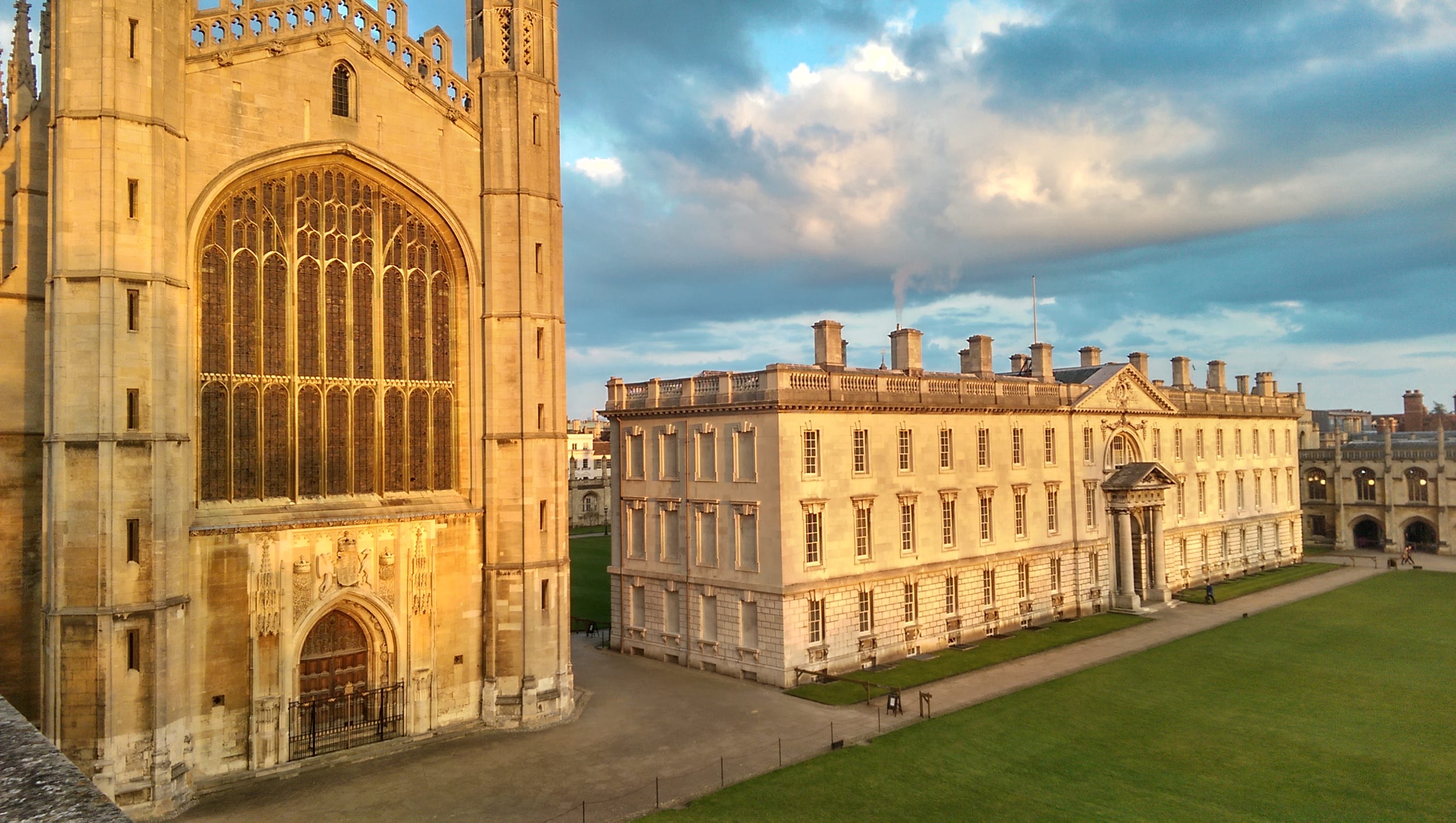
Many months of revision and interviews followed, then the agonising wait for results. I was fretting, overthinking how the interviews went and what I said; I spent weeks pacing, updating the UCAS admissions portal several times a day.
Hoping.
Telling myself I didn’t care, whichever outcome would be fine, even though deep down I cared so much it felt like it took conscious effort to make sure all the atoms of my being stayed together without exploding.
Then the fateful day arrived. I remember it so vividly: sitting at my desk in my childhood bedroom, opening the email, shaking with nerves and then reading the line: Unconditional offer to study Natural Sciences at the University of Cambridge. I couldn’t believe it. I just started smiling – or laughing even – hopping around the room, little explosions of manic energy bursting out of me. It is to this day the most emotionally intense day of my life. But the real feeling underneath it all was not gratefulness or happiness. It was validation. I felt like all my doubts about myself, all the question marks, all the feelings of being an imposter evaporated with that single line. This was the evidence. This meant I was someone of worth, someone that mattered.
Again, all these feelings were undercurrents, undefined and unstated. I just felt this elation and joy as if everything was going to be alright from then on.
But of course it’s not so simple, when worth is derived externally.
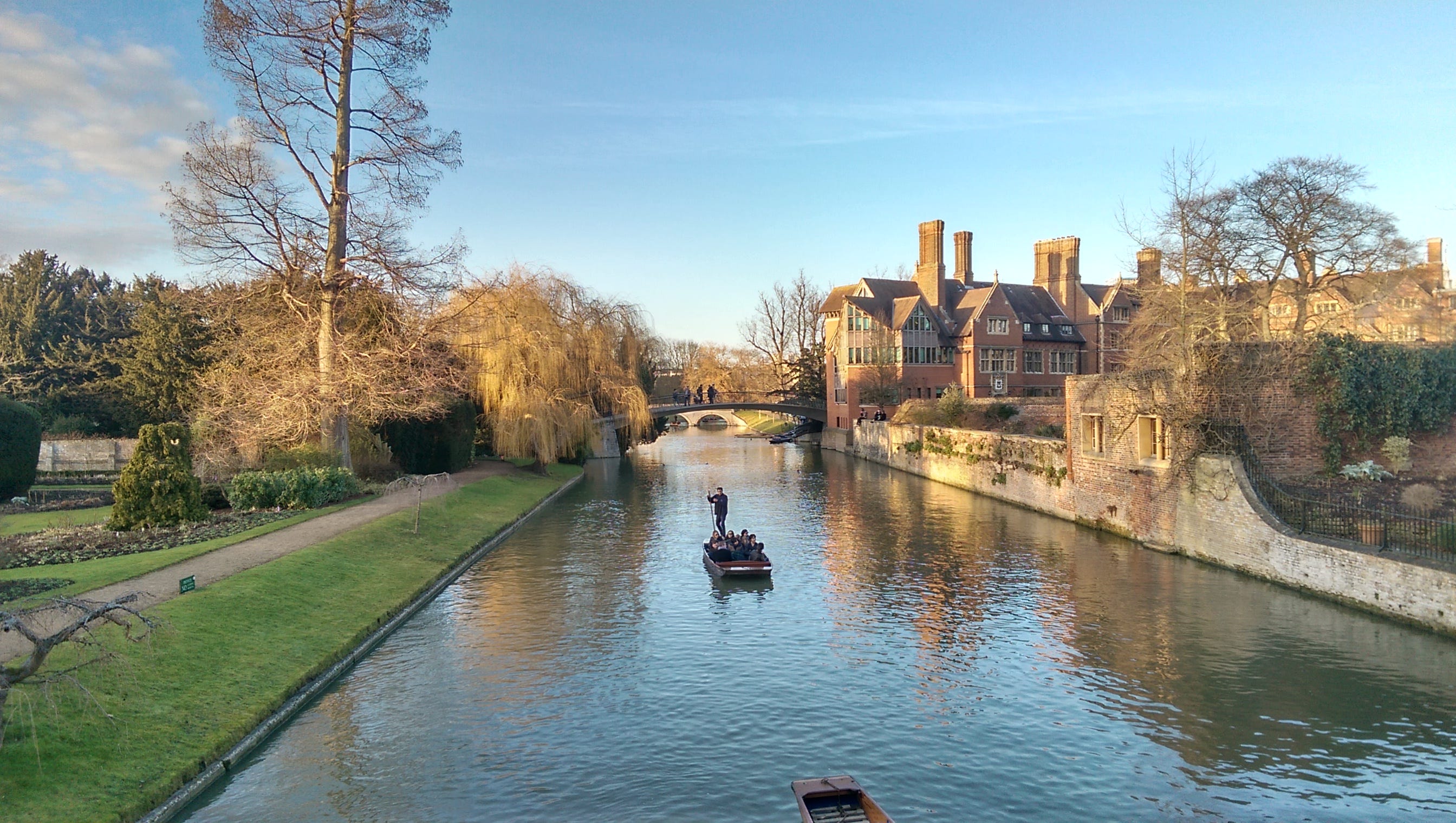
I got to Cambridge, a Swede with no real understanding of the English schooling system, studying in a second language, a few years older than everyone else and with a less technically rigorous background.
And slowly doubt started slithering back, creeping in around the edges. Comparison started morphing the experience. Thoughts started telling me the things I’d used to feel, things like: I’m not quite good enough, I’m not up to scratch, there are so many others better than me, I’ll never make it. Everyone around me was sharper, more dedicated, had published papers, or knew how to code, or [fill in the blank here]. Ultimately, it didn’t matter what it was. All that mattered was that, yet again, that small insidious thought returned: I am not enough.
But my ambition remained strong, born out of a drive, a desperate longing to prove myself. I was at Cambridge after all. I would surely be enough eventually? All I needed to do was to keep climbing higher, keep achieving until one day the validation I felt when I got accepted to Cambridge would return. Right? And then I would finally be content and be able to feel like I mattered, that I deserved my place in this world.
This isn’t to say that my enjoyment of learning about the world was not genuine, or that I did not love my time at Cambridge. That deep curiosity was honest, pure and in many ways a love for the world and its underpinnings that still remains. But it was all tangled up in ambition. Being there, I defined my whole personality around science, around being intelligent. That was who I had to be, and only through success within that could I find validation in this world.
So after my undergraduate I was desperate to continue in science, to prove I had what it takes. I wanted to do a PhD. Surely if I got accepted for a doctorate, and completed it, published papers and became a real, respected scientist, surely then there would no longer be any doubt? Surely then I could finally feel like I was enough?
This is the first part of my road to burnout, and I’m sure you can see the potent ingredients brewing, the hold of breath before the spiral and collapse, as has happened for so many of us. I hope you tune in next week to see if the PhD really did solve all my problems…
Thank you for reading. Writing this has been in equal parts difficult and cathartic; I hope some of it resonates. Burnout is a multifaceted, complex slow death, and everyone’s road there is unique, but also shares many similarities.
If you enjoy my writing and want to support it please consider a free or paid subscription.
All of my writing is free to read, but it is sustained by the generosity of readers. If you’d like to support me, all new paid subscribers currently get 20% off here:
https://www.alexandergunnarsson.com/JoinTheCrew
Thank you so much for being here.
Read part 2 here:

I've been there, friend. It's a tight spot to be in, squeezing yourself into something that doesn't quite fit. It pinches your toes or gives you blisters. To use a sailing metaphor; I've sometimes felt like life is just luffing, you know?
Isn't there a proverb about how you are not able to direct the wind, but you can adjust the sails? It makes me happy to know that you've found the joy in watching the spinnaker pull you downwind. I appreciate your vulnerability and candor. I'm looking forward to the next installment.
Alexander, such clear writing, as is always the case when it comes from a deep wellspring of truth. This articulates so very clearly, a difficult-to-name dissonance, and it does so with frankness, respect, and compassion. I understand this kid you write about. I feel for this kid you write about. I am/was a version of this kid you write about.