

After dinner I row ashore and stroll up along the shortest river in the UK, connecting fresh water Loch Coruisk — high above the anchorage — to the sea. I walk along in the half light of dusk, surrounded by steep rocks that fade into the distance, enshrouded by a light, misting rain. There are scattered boulders perched on top of rocks and hills everywhere, and some of the smooth, exposed rock I walk on is scored by deep gouges, the visible effects of the ice sheet that moved over these places millennia ago.
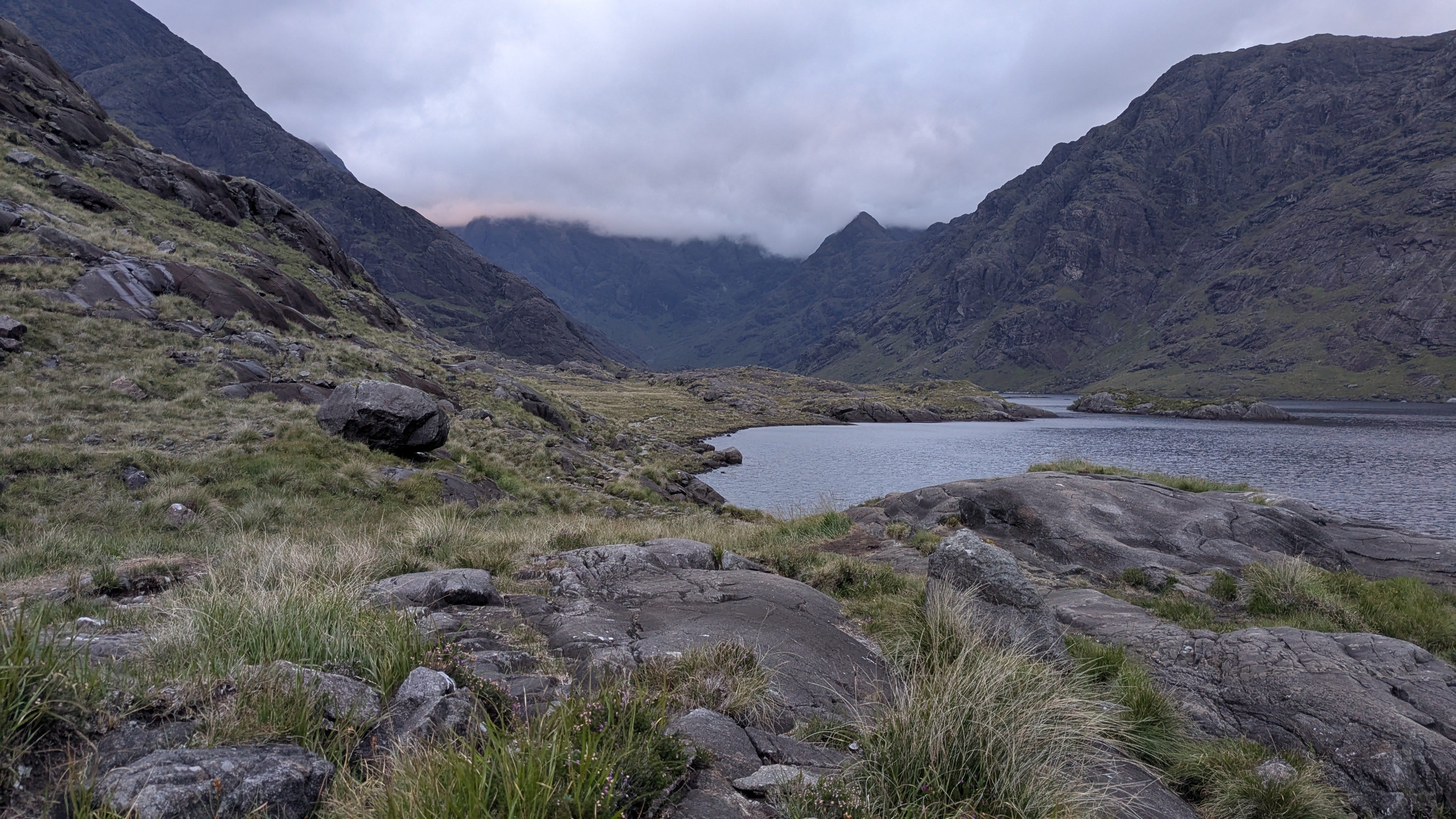
The veil between us and history feels thin here somehow. These rocks and isles have stood here longer than all human lifetimes. I sit for a moment and take it all in.
I’m thinking about time, place, colour and light, shifting my attention trying to perceive my surroundings. I notice the muted colours of this vista, a defining feature of these Scottish island landscapes. They have a wildness to them, seeming almost inhospitable.
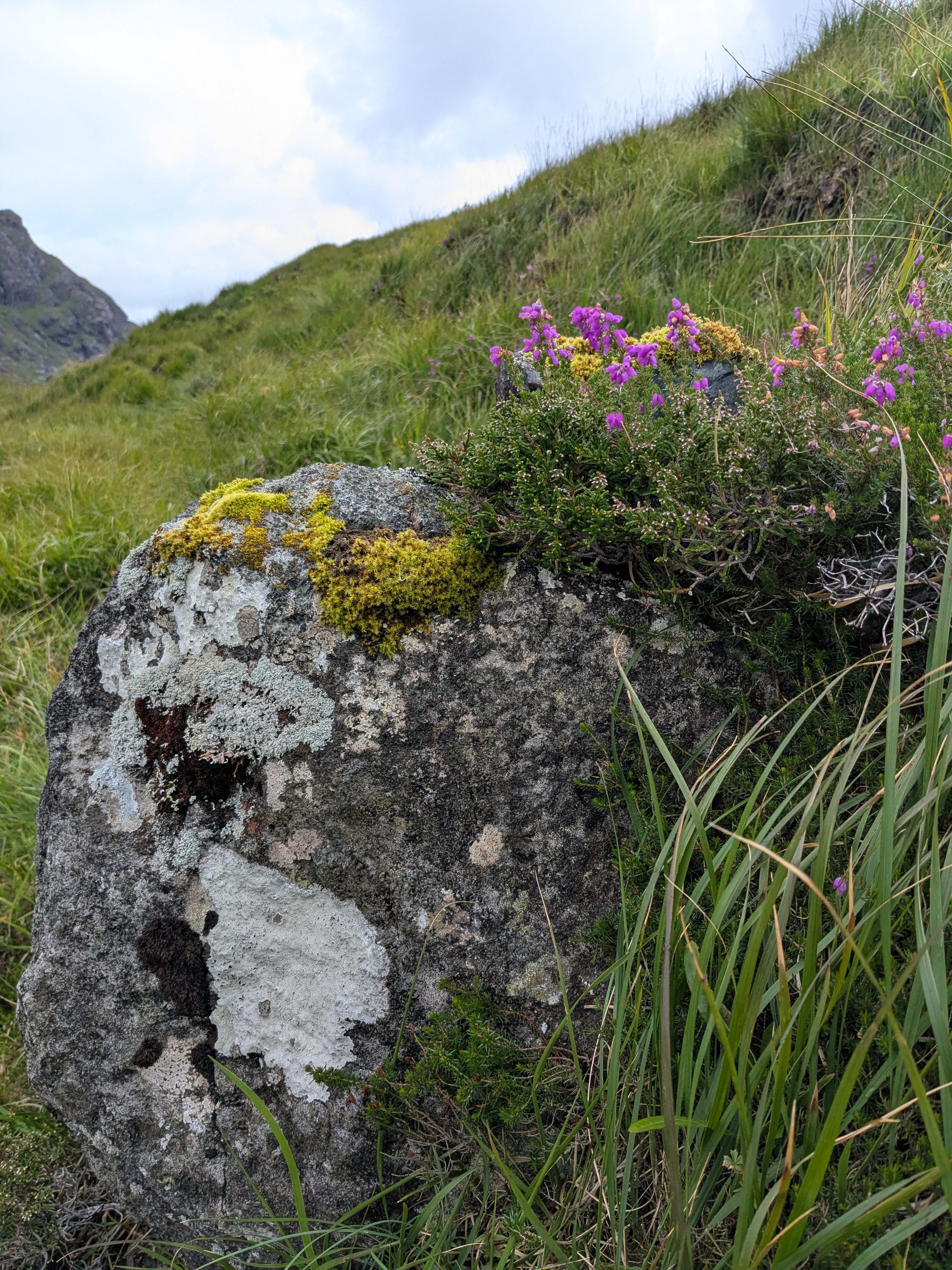
There is a spectrum of greys in the rock faces and the smooth flowing ice-carved cliffs. Some lichens grow sparsely, reddish white, others pale yellow or ivory white. The grasses are green but not vibrant, dulled by beige and straw. Tiny purple flowers occasionally burst out of the heather.
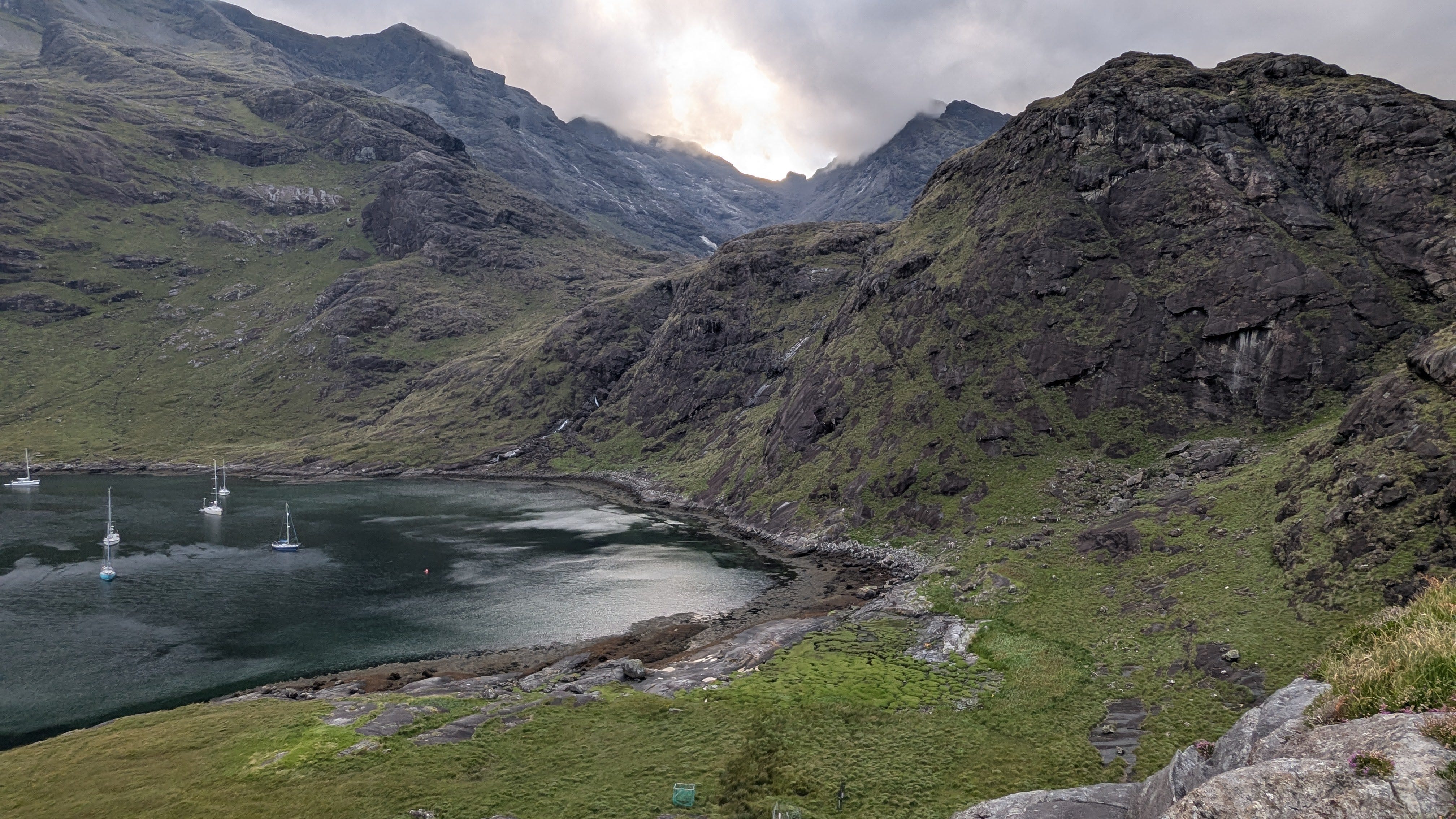
The towering rocks of the Cuillins seem dark, brooding, almost black. But the constant mists wet the rocks, and when they catch the light they shine and sparkle, silver bright. The sea goes from a blue-green lagoon to obsidian black where the reflection of light and rock makes the surface opaque. The Scottish isles are uniquely beautiful. It is such a privilege to be able to sail here, and to see both the richness and scarcity of life.
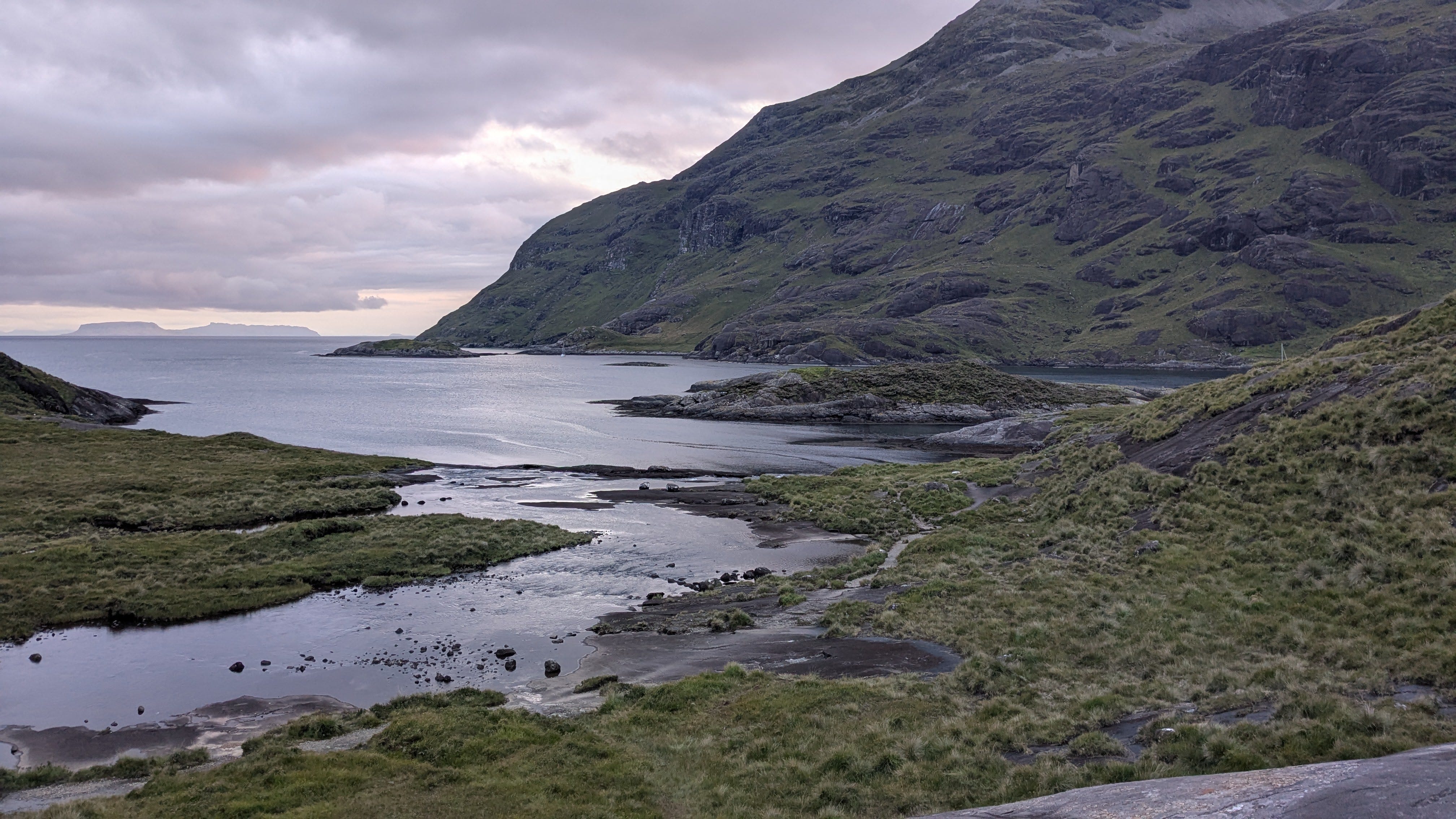
As I sit overlooking the sea, with Loch Coruisk behind me and the ancient rocks and cliffs all around, I see the traces of time etched across the landscape. The rock I sit on is smoothed by the ice, lines etched deep by its movement, twenty thousand years ago. Grasses and plants, flowers, lichen and algae are scattered irregularly. The movements of time and water visible everywhere.
The sea shifts and changes as the tide moves in, driven by the sun and the moon and the Earth’s rotation in a solar system 4.6 billion years old. Flowing clouds shroud and change the landscape; the peaks seem to live in the heavens, always covered from view.
I think about the movement of water: the droplets in the clouds that cover these peaks, dripping down, eroding, collecting, until it flows down to the loch, and eventually the sea where it again evaporates and returns to cloud in a continuous cycle, seemingly eternal. But it will erode the rocks to nothing over time, and the minerals of those rocks wash out to sea and become part of algae, fish and us — sustaining life.
We are all part of Earth and it is also in us; all matter part of our one planet. Billions of years of evolution — based on those minerals and compounds — shaped all of us.
How foolish it seems to believe we are separate or different or not part of nature.
We are of Earth. That’s all we can be.
This is a journal entry from my time sailing around the West Coast of Scotland, and part of chapter 15 of my memoir about the trip.
If you enjoyed this, love nature writing and are as interested as I am in the richness and the soul-healing that comes from being out at sea or amongst mountains, please subscribe below to join the community and receive the weekly newsletter..
There is now an option of a voluntary paid subscription. None of my writing will be locked behind paywalls, but if you enjoy what I do and want to support it so that I can keep writing, and keep Kismet afloat, a paid subscription is greatly appreciated.
As a thank you, paid members get access to the Captain’s Quarters (our private community chat) and a welcome package.
This story is part of a set of themed essays around nature and finding belonging. You can read the other essays here:


This piece captures something I return to over and over again. I find myself constantly drawn to rocks. Putting my hands on them feels as close to time travelling as I can get. I love that sense of connection to the planet, as it is now, was then, and will be. Lovely words, Alexander.
Gorgeous photos and reflections, Alexander. I felt that place in my skin. Ancient and heavy with mist. Thank you for the beautiful escape this morning!