

The Far Horizon
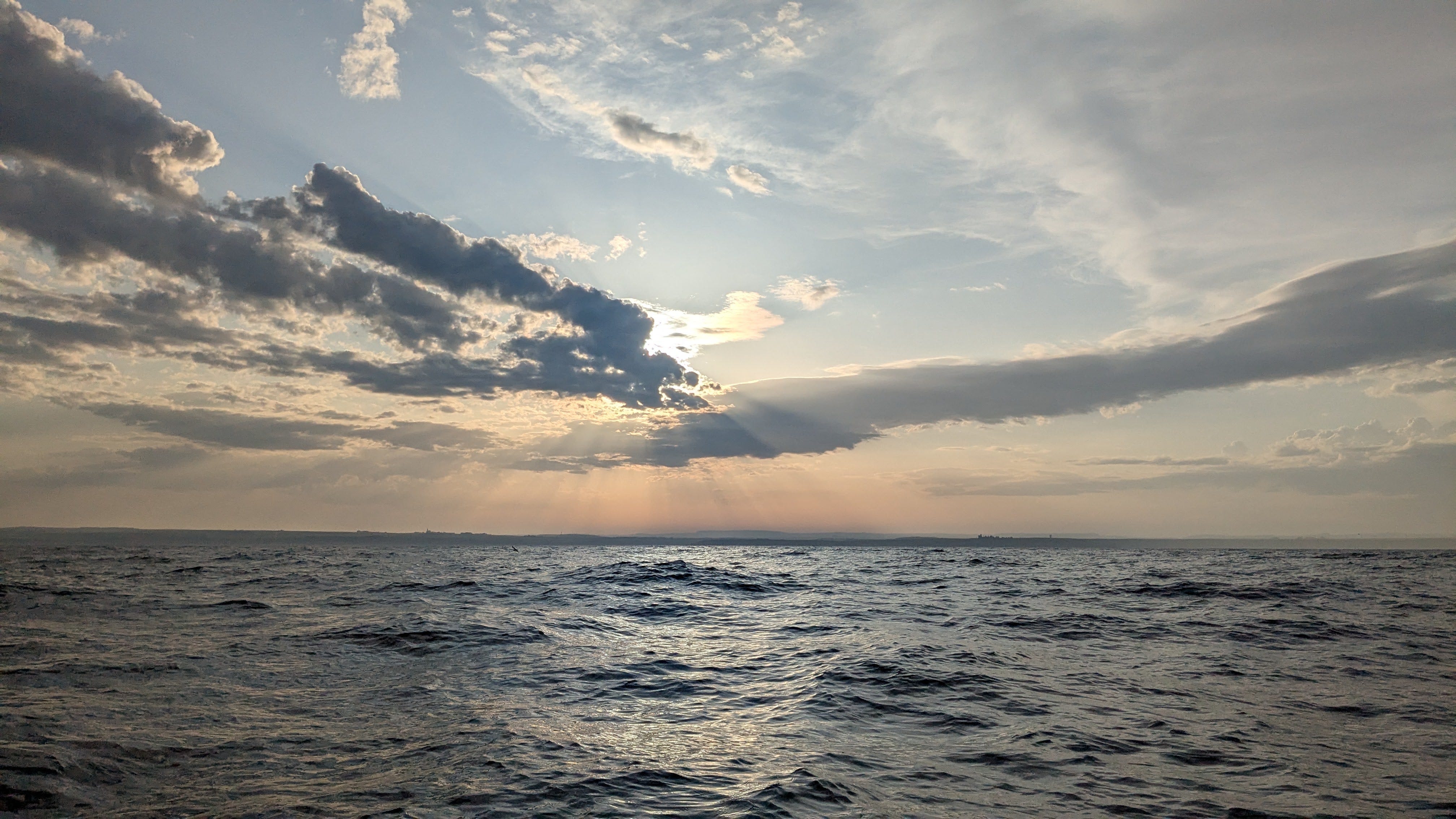
I look out at the faint light on the North Sea horizon,
as I sail towards it, pulled ceaselessly by the moon across
a silver sea, carried by a restless wind over the waves.
Heaven and Earth conspiring.
Are the answers I seek in that pale, distant line?
This is part one of a 12-part series detailing the log of my sail around Scotland in 2025. For details on the voyage and what to expect in future essays, read the announcement post here. Please subscribe to Soulfaring to receive future essays and to support my writing.
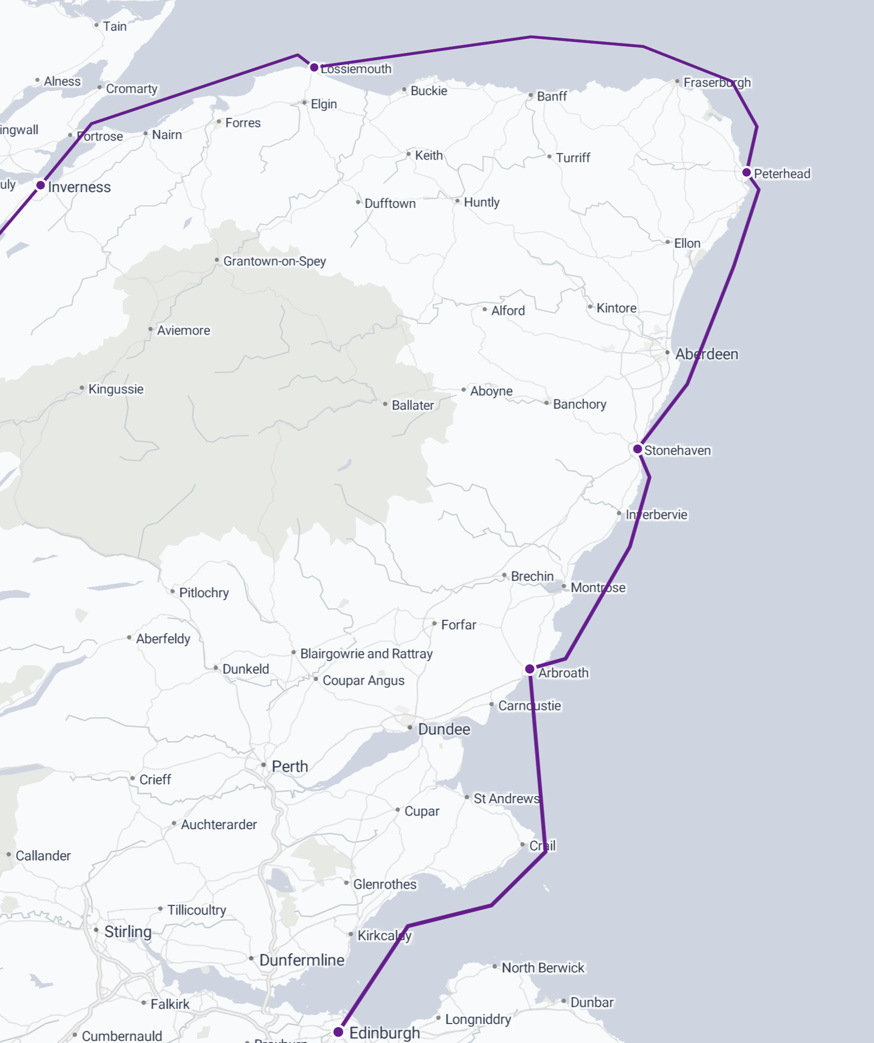
Day 1: Edinburgh-Arbroath Distance: 50NM, Passage time 12h.
Wind: F2-3, Sea state: Smooth
The air felt different on the morning we were about to set sail for Inverness and the West Coast. After a long cold winter in the yard, over six months of work restoring this 50 year-old sailboat, we were finally ready to set off. The chill morning air and the hesitant sun seemed urgent, impatient. Me and my partner Helen had woken up just after dawn to get Kismet ready for the first day of what I hoped would be months of sailing. Where we would go we didn’t know. We just knew we needed to go.
But how do you get ready for such a big trip in so small a ship? I had sailed several thousand nautical miles as crew on other boats, but never skippered my own for more than a day sail. Helen had not sailed at all. So we did our best to prep for the day’s sailing. I looked over the engine one last time, and checked the forecast and passage plan, while Helen refilled the water tanks, and stowed all our food and gear. We were planning a sail out of the Firth of Forth to a small seaside town northeast of St Andrews, called Arbroath. And there we’d see. Something could break (most of the boat was my own handiwork, hopefully impeccably done, but who knew?) and that could force us to abandon the trip. She is an old boat, and things always break on old boats.
I began sensing the quiet anticipation of the start of a grand adventure as we finalised the last few things. I fired up the engine I’d finished rebuilding just weeks prior; its steady beat mirrored my own heart. As we slipped the mooring lines and said goodbye to the little harbour along the banks of Edinburgh and motored out onto a glassy calm sea something inside immediately shifted. Some invisible weight lifted as we passed an invisible portal into our new life. We were finally on our way. No more planning, no more prep, just pure sailing, towards the horizon as far as this little ship would take us. As Edinburgh disappeared behind us and the coastal towns of Fife passed to port, we settled in for a long day at sea.
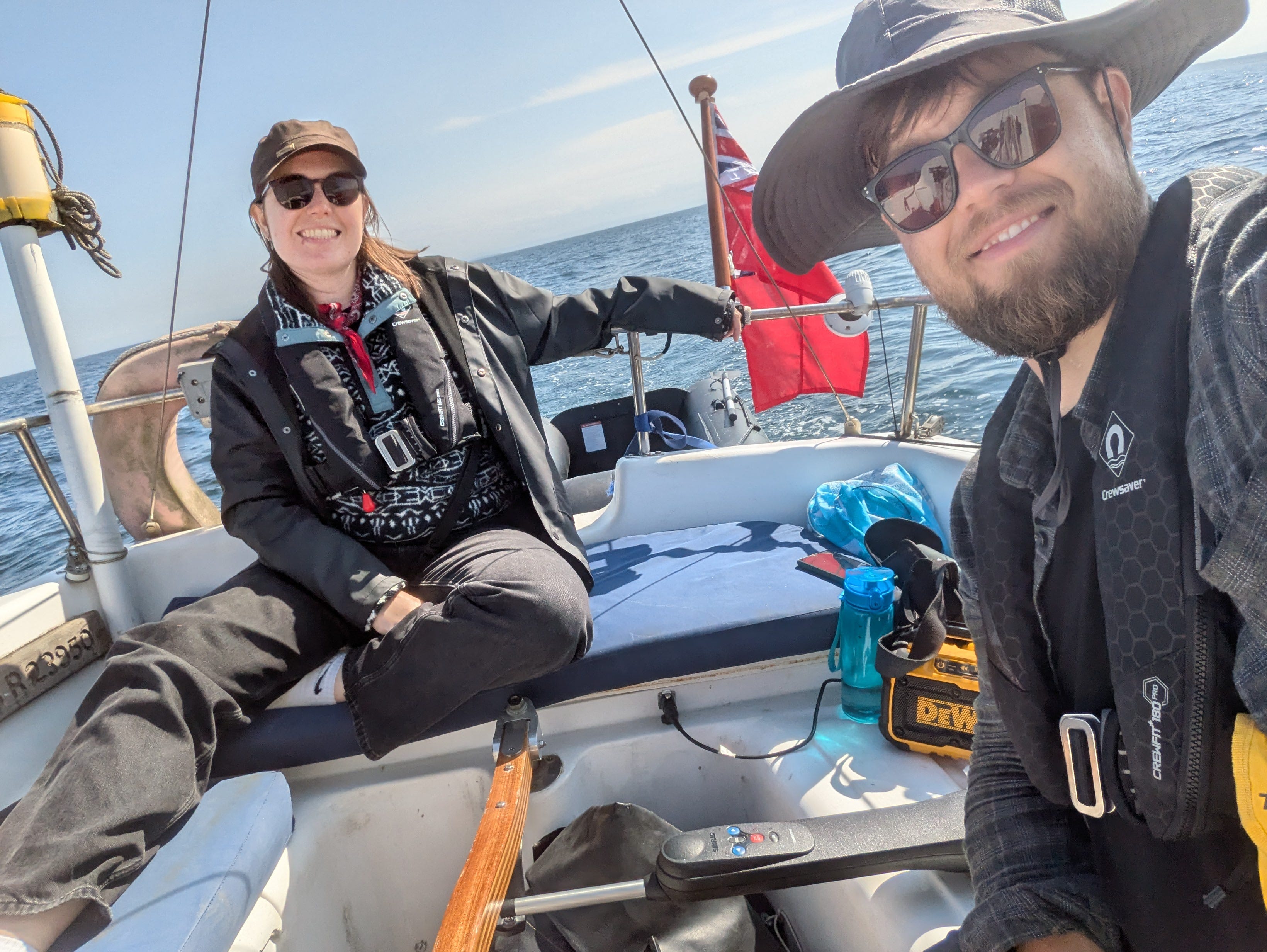
Sailing is a slow form of travel. The 50-mile passage to Arbroath is 12 hours at Kismet’s average pace (4-5 knots). I kept my eyes on our course, the sails, the wind forecast, the charts and stole a glance out across the blue water as often as I could, getting lost in the movement of gently rippling waves, lazily swimming puffins and diving gannets. Harbour porpoises and seals curiously peered at us as we passed the rocky islands of the Forth on our way towards the North Sea. It was like a spell had been cast on me; I sailed through our first day in a state of bliss, fully immersed in wind and sea.
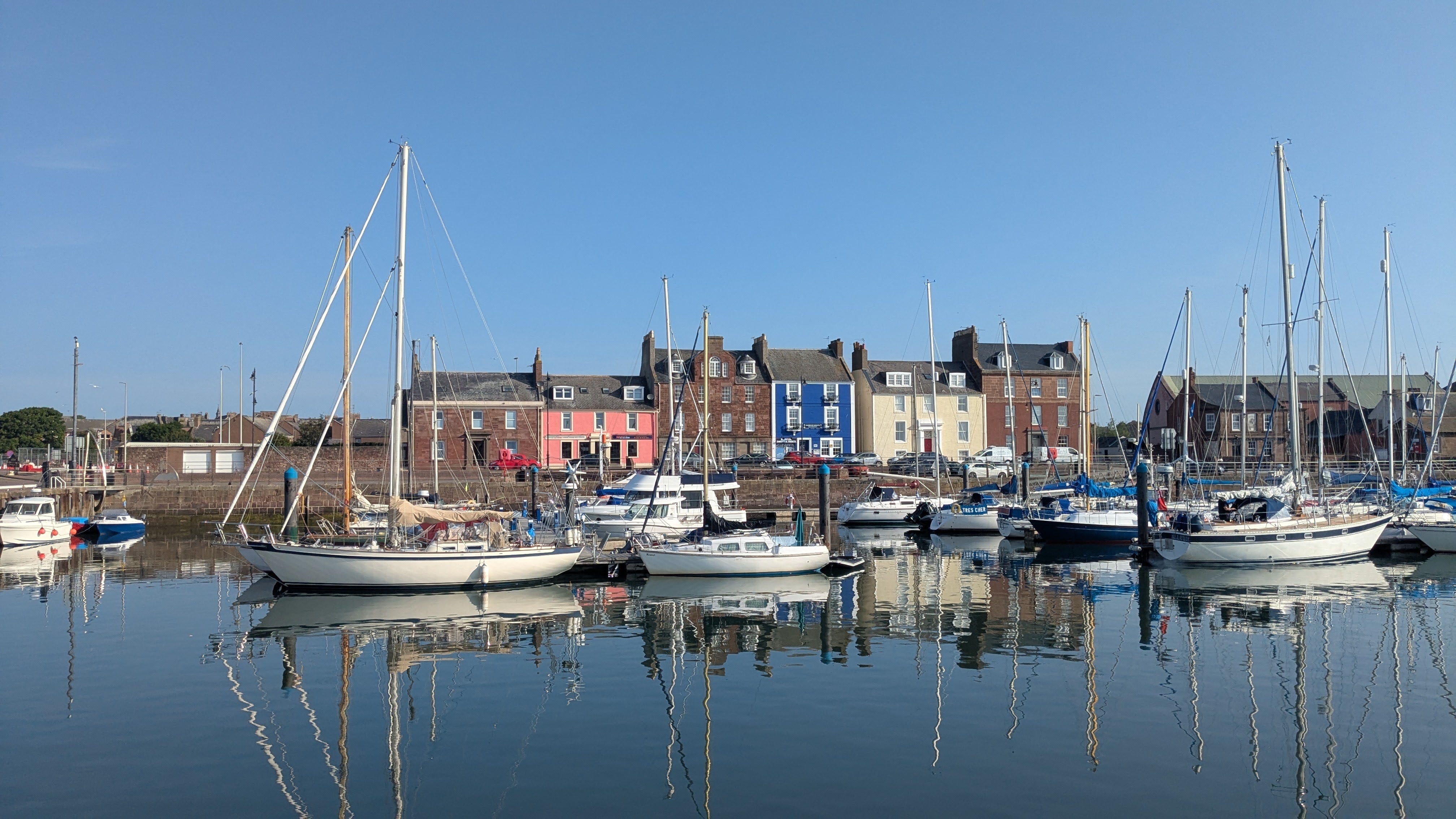
By 7 in the evening we moored up in Arbroath. Kismet’s very first harbour outside of Edinburgh. I imagined Kismet to be as excited about the trip as Helen and I. We were finally on our way.
Days 2-3 Arbroath-Peterhead, Distance: 70 NM
Passage time 15h over 2 days.
Wind: F2-3, Sea state: Slight to Moderate
The North Sea has a reputation for dangerous conditions and large seas in foul weather, so I kept a keen eye on the forecast, looking at our next two days of sailing up to Peterhead. Luckily the forecast promised sun and gentle winds. The North Sea was flat and docile as we set off from Arbroath the next day, after a slow morning ashore waiting for the tides to turn north. The tidal conveyor carried us at about 1 knot, the moon pulling us ever northward. Helen quickly settled into it, knitting in the sun as I checked sails and rigging, and started experimenting with flying our spinnaker in the light winds.
The spinnaker is a great lightweight, colourful balloon of a sail, perfect for downwind sailing, but I had never learned to fly Kismet’s. I started wrangling the mass of canvas and lines to set it all up, and after about an hour of trial and error and a lot of swearing I had it all rigged and ready. I hoisted this big billowy sail and felt the surge of speed as it filled with wind. Sweating and blissful, it was a moment of pure victory. I sat for a moment in the shade under the great canvas at the bow of Kismet, looking out at the expanse of the North Sea to starboard and the verdant coast of Scotland to port. I felt a longing to never stop sailing, never stop moving, and to stay in that moment forever – a deeply considered life.
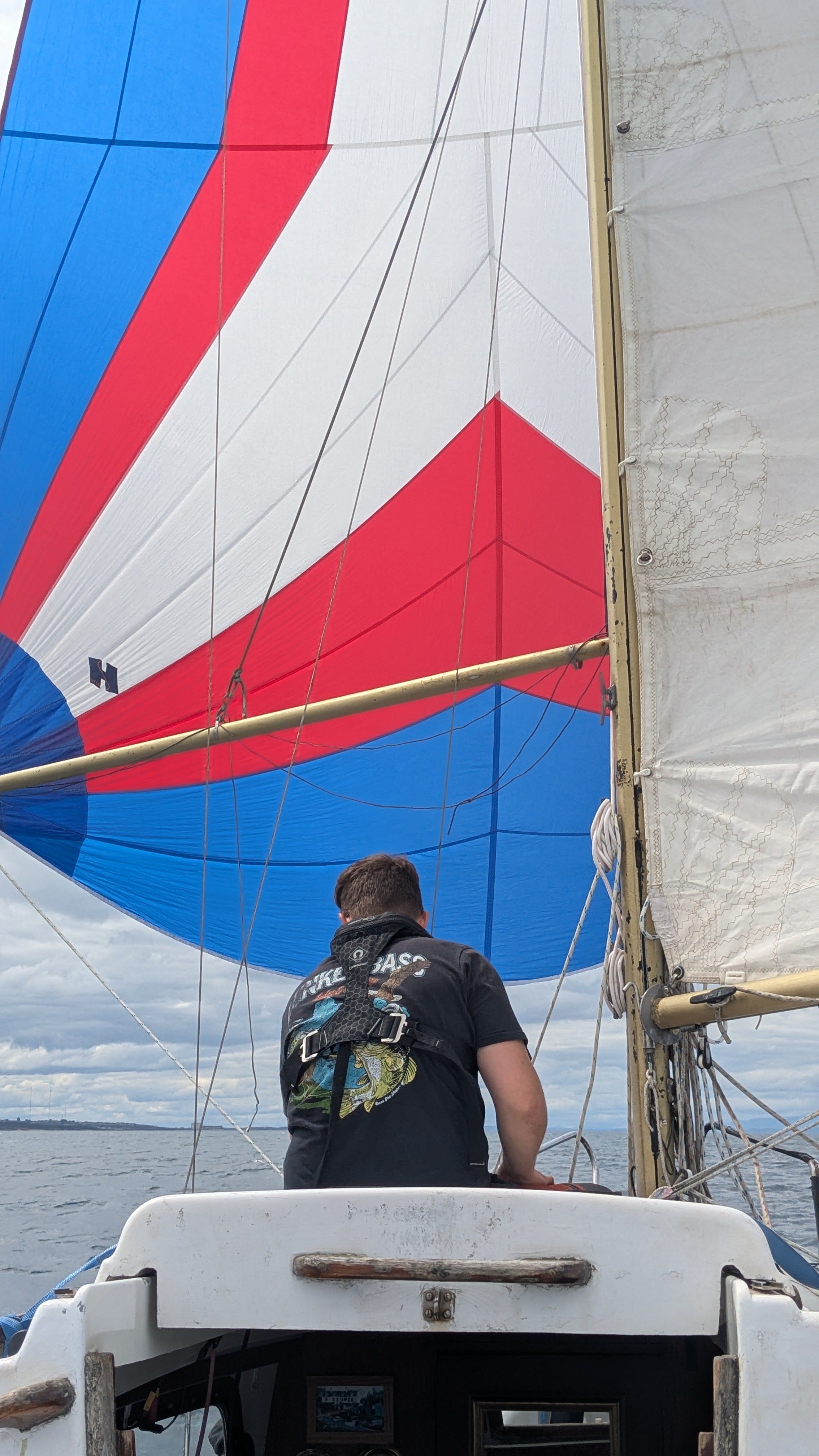
When we approached Stonehaven, a huge pod of bottlenose dolphins joined us, swimming at Kismet’s bow, granting us guidance and support after a long day of sailing on the open sea. Their sleek forms moved through the waves, eyes occasionally peering up at us, seemingly seeking connection. We were there together with these dolphins, living out on the water. It made us forget the rest of the world for a moment. It was Helen’s first time seeing dolphins, and between the glorious spinnaker sailing and the dolphins I could sense that she was finally starting to share my love for sailing.
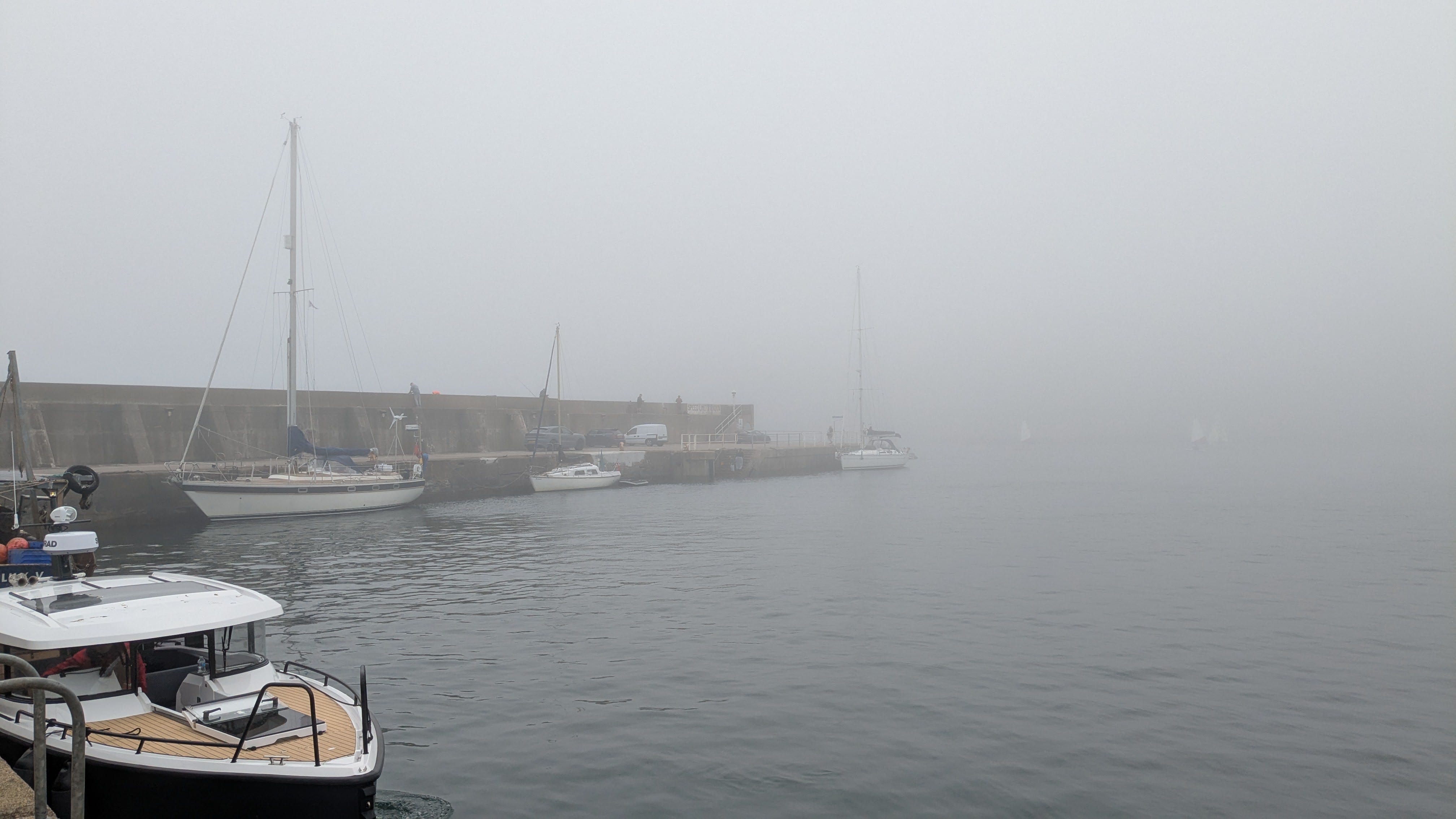
We spent a long night against the pier in Stonehaven, another small fishing village, and woke up in the densest fog I had ever seen. We missed the turn of the tide and set off late as the fog cleared mid-afternoon. We sailed into Peterhead after a long slog of a day against tide and wind, but apart from boredom, the sail went well. We’d sailed our first 100 nautical miles, and were getting used to the rhythm of life at sea.
Days 4-6 Peterhead-Inverness, Distance: 105 NM,
Passage time 26h over 2 days.
Wind: F2-F4, Sea state: Moderate then Slight later
A gale blew through the next day and we stayed cosy on board, safely moored up in Peterhead. It’s remarkable how quickly you get used to a tiny living space. The saloon is as small as a camping van, with a cooker and table, two berths and not enough room to stand. And yet we were comfortable reading inside, cooking up delicious lunch and dinner on the two-burner alcohol stove, and planning the final passage to Inverness. A simple life, but fully sufficient.
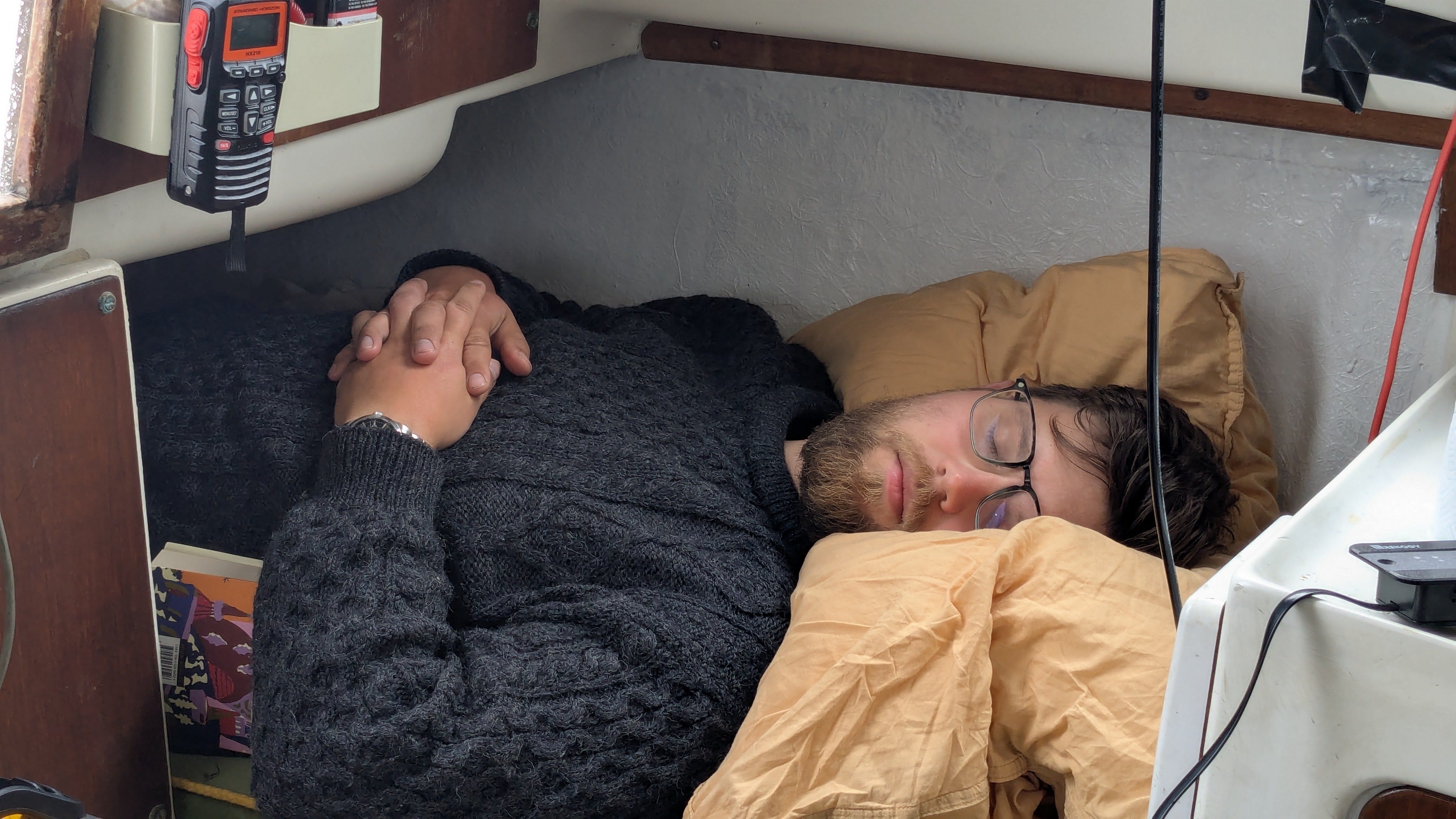
We were finally able to sail again in the early morning, 36 hours after arriving, as the winds eased and the tide turned. We set sail at 1am hoping to make Inverness in about 24h.
The darkness was tangible, velvety deep and otherworldly, as we sailed into the unknown and the harbour lights disappeared behind us. I took the first watch and Helen went below to sleep. As the hours passed I relied on my other senses for navigation and safety. Immersed in darkness, with only the compass to steer by, the elements became an extension of my mind. I sensed the wind as it shifted and lulled and adjusted the sails when needed. I felt the constant rolling waves as they carried us along, and I listened to the sea and the wind and the waves, letting them lull me into a trance. When the sun finally rose above the horizon I was content and knackered, at the verge of hallucinating, yet deeply at peace. Helen took the helm as I went down below to sleep, dreaming of spectres and creatures in the dark, just out of view.
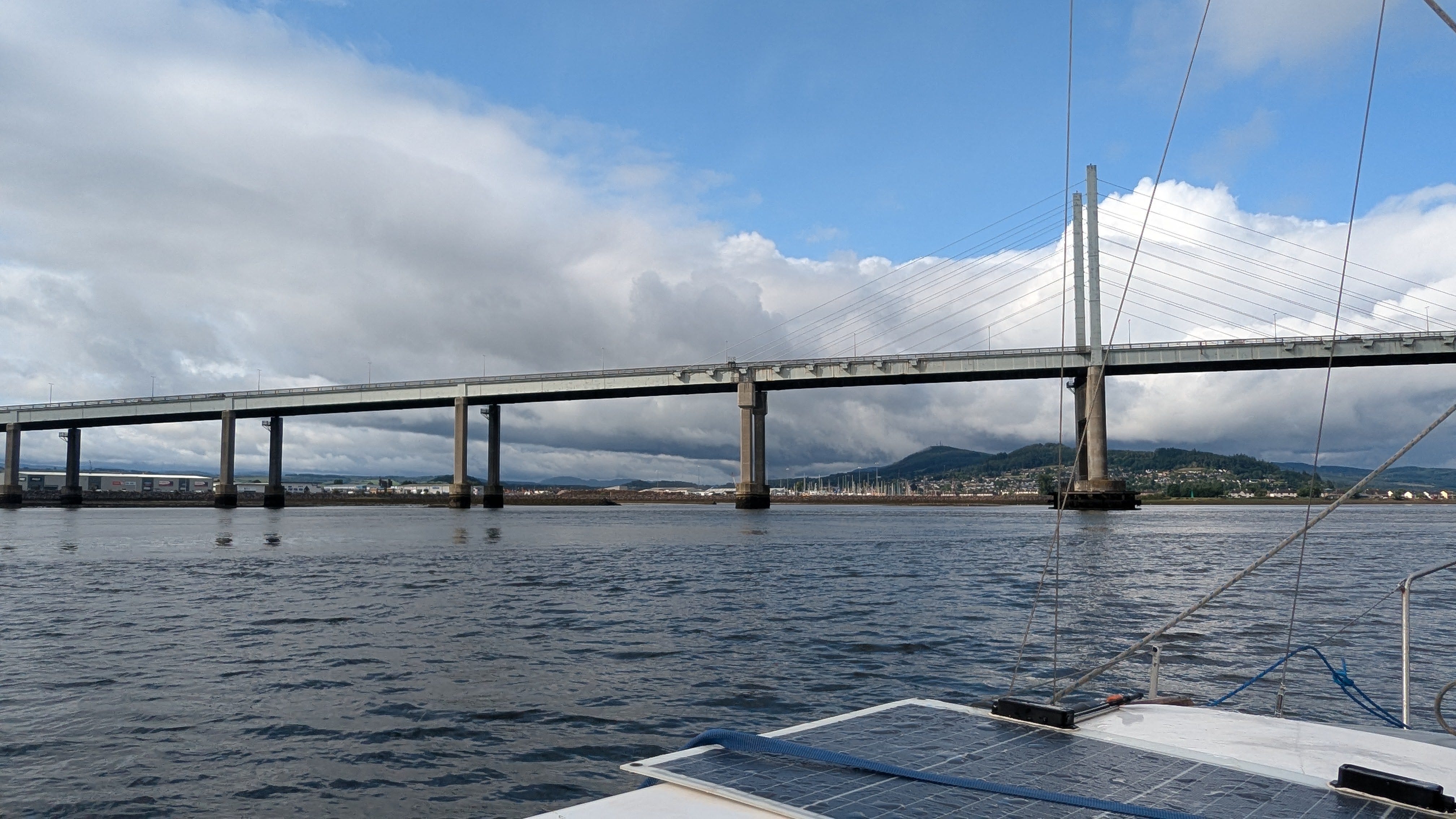
After a short pitstop in Lossiemouth to rest up we sailed the final miles to Inverness. Now surrounded by hills and mountains we started getting excited for the next part of this journey, envisioning what it might be like sailing through the Caledonian Canal and reaching the West Coast. As we sailed down the Moray Firth, approaching Inverness, we were surrounded by a dozen dolphins playing in the strong tidal currents. And just as we looked away from their playful, smiling eyes we saw the Kessock bridge of Inverness in the distance. We’d made it. What will the Caledonian Canal have in store for us?
Total trip log: 225 Nautical Miles
Join me in The Captain’s Quarters
Thank you for reading and for joining us on this voyage. For those who want access to additional behind-the-scenes footage and videos of the passages, paid subscribers (£4/month or £35/year) will have access to The Captain’s Quarters Subscriber Chat along with several other perks and gifts:
The Soulfaring welcome pack: A free set of physical Soulfaring postcards, plus a 50% discount across the Etsy print shop.
The Captain’s Quarters vault: Additional pictures and videos from life aboard Kismet sailing the beautiful shores of Scotland for all the upcoming instalments in this series.
Book club access: Full access to discussions in the Forgotten Voices seasonal book club along with free e-books (4 per year).
A place in the story: Your name in the acknowledgements of my upcoming memoir.
Join Alexander Gunnarsson’s subscriber chat
The second instalment:
II. Ancient Lochs: The Caledonian Canal
will be published in two weeks time, on Saturday 17 October. Please subscribe to receive future essays right to your inbox and to support my writing.
Fair winds,
Alex
Wonderful! Loved it!
Best wishes!